About me
The future I want to help build
Science fiction has fascinated me since childhood. Over the years, its films and novels have shaped how I imagine the future: the superintelligences of Hyperion, the robots in Asimov's Foundation universe, WALL-E, and TARS in Interstellar. I find it hard to imagine the future without thinking about the intelligences we might share it with. What draws me in is not only how capable they are, but how they live alongside people.
The imagined worlds of Ready Player One, Pantheon, and The Matrix raise another question for me: how does intelligence relate to the world it inhabits? These stories are part of why I am drawn to world models, and to the possibility of agents that can understand their surroundings, imagine what might happen, and learn through interaction.
I believe that LLM-based AGI may arrive soon. The part of that future I most want to help build is the physical agent: an intelligence that can do more than talk to us—it can act in the world with us. I am excited by the practical benefits this could bring, from help with everyday tasks to greater independence, better care, and companionship.
Joi in Blade Runner 2049 is especially close to this vision for me. As a holographic companion, she is present in K's daily life, shares his search for answers, and helps him interpret what his memories might mean. I am drawn to an agent that knows a person's history, helps connect scattered clues, and offers emotional support. But I keep imagining one step further: what could Joi do if she could also interact with the physical world?
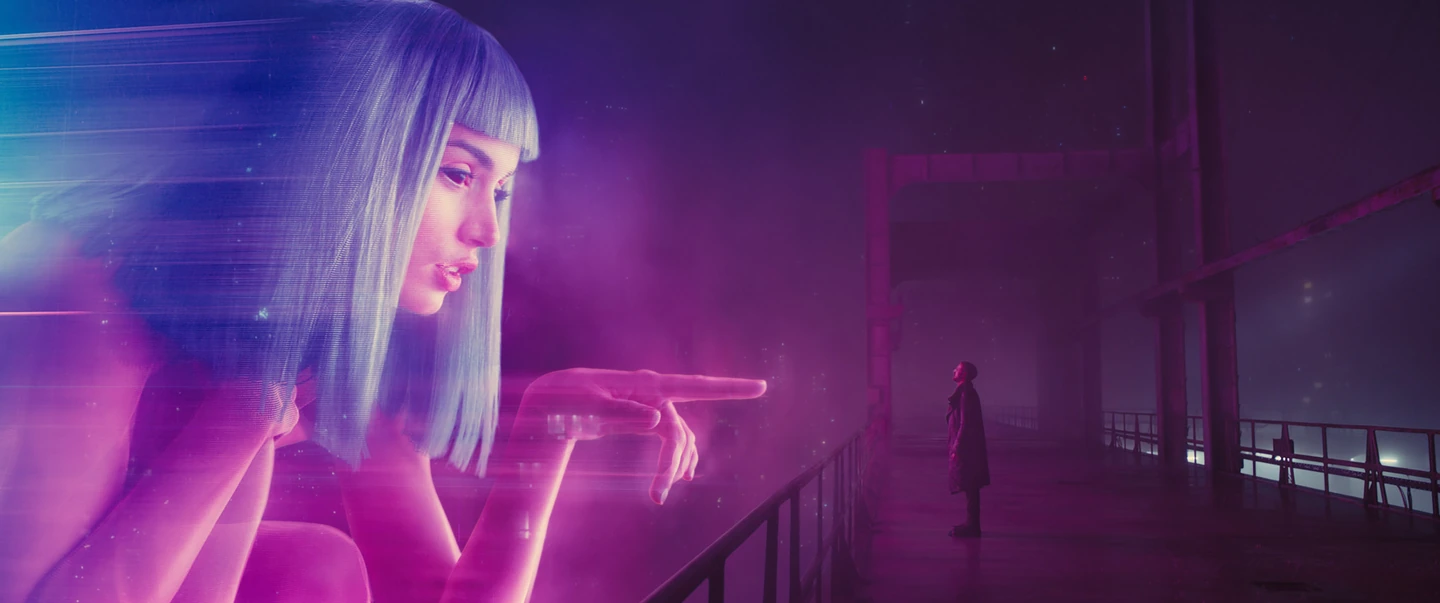
In the future I imagine, such an agent would not be tied to a single body. At home, it could use smart appliances and a robot to cook and take care of chores. On the road, it could operate a vehicle. In a medical setting, it could bring relevant knowledge of a person's history to a surgical robot, assisting a clinical team under human supervision. Its physical form could change with the situation, while its memory and understanding of the person remain continuous.
This is why I want to work on physical agents. I want to understand how an intelligence can learn to use different bodies, anticipate the consequences of its actions, and become more useful through experience. My hope is to help turn the familiar science-fiction companion into something that can offer practical help—not only a presence on a screen, but a participant in the world we share.